- Call : +91 9137817004 | +91 9152546638
- Email : info@capital.in


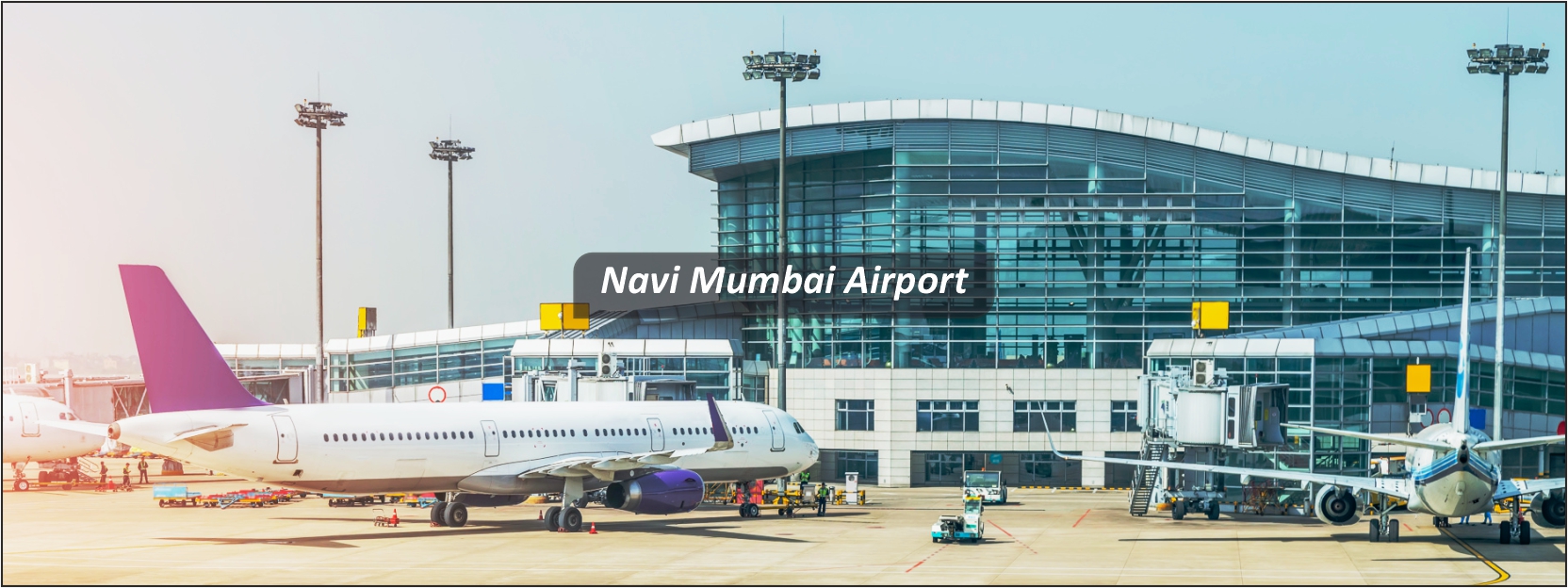

The airport, named after Dinkar Patil, a prominent leader, is situated in Ulwe, Navi Mumbai. The project is overseen by the City and Industrial Development Corporation (CIDCO) and is being constructed in phases. The first phase aims to accommodate 25 million passengers annually, with a final capacity projection of over 90 million passengers by 2032.

Navi Mumbai International Airport Limited (NMIAL), a joint venture between Adani Airports Holdings Limited and CIDCO, is overseeing the project, with Adani holding 74% equity. The project, estimated at ₹16,700 crore, operates on a Public-Private Partnership (PPP) model, with CIDCO managing the execution.

Construction commenced in August 2021, following Prime Minister Narendra Modi’s foundation stone-laying ceremony in February 2018. This collaboration injected fresh impetus, leading to significant progress, with 57% of physical work completed by November 2023. The airport is expected to be operational by March 2025.

The project was first proposed in 1997, with initial site recommendations made in 2000. After several feasibility studies and approvals, including environmental clearances, the project received in-principle approval from the Union Cabinet in July 2007.

Over the years, the project faced numerous hurdles, including environmental concerns, land acquisition issues, and resettlement challenges. CIDCO worked to address these challenges, including diverting the Ulwe River and resolving rehabilitation issues.

Despite delays and protests, construction progressed steadily, with Larsen and Toubro (L&T) awarded the construction contract in 2019. Adani Group’s involvement in 2021 injected new momentum, leading to significant progress, with 57% of physical work completed by November 2023.

The airport spans 1,160 hectares and features extensive infrastructure, including two runways, three interconnected terminals designed by Zaha Hadid Architects, cargo terminals, fuel farms, and aircraft hangars.

Upon completion, the airport aims to handle 90 million passengers annually and accommodate significant cargo traffic, contributing to regional connectivity and economic growth.

The project includes measures to mitigate environmental impact, such as mangrove preservation and hydrological studies to address water flow concerns.
©2026 Capital. All Rights Reserved.


